
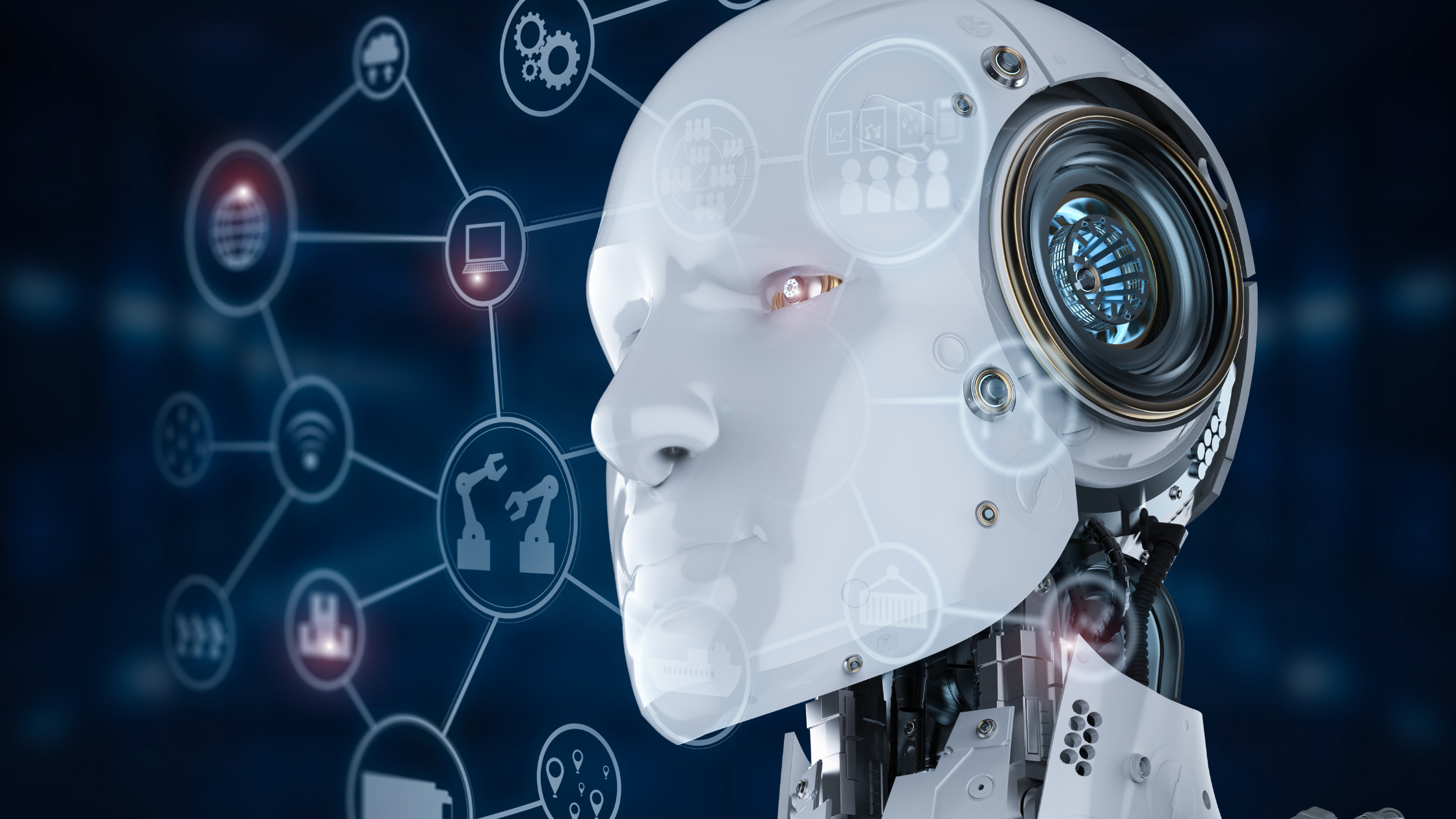
AI and Visual Intelligence are changing the perception, comprehension and engagement of the visual sphere by the machines. This blog dives into what actually sets visual AI and traditional AI apart, how novel methodologies such as multimodal AI and visual intelligence and on device AI and visual intelligence are transforming industries, and why VisionBot is the best choice to provide businesses with actionable visual AI capabilities.
Understanding Visual AI: More Than Just Seeing
Visual AI is the use of deep learning to interpret an image, video feed, or live camera input. Visual AI, unlike conventional AI, which may handle only text or structured data, integrates perception and cognitive inference to spot visual patterns, i.e., identify objects, scenes, gestures, anomalies, etc.
The difference between AI and Visual Intelligence is that it understands the context, spatial relationships and semantics, by creating meaning out of pixels. Researchers have demonstrated that AI identifies objects through more shape or color than human meaning, resulting in so-called visual biases that deep learning models are using.
Why Visual Intelligence Is Different: Key Advantages
- Context‑aware perception: Visual AI systems not only recognize what appears in a picture, but also understand how things relate to each other in a specific location—like the book on the shelf or the ingredient on the countertop.
- Continuous learning: In contrast to fixed rule-based systems, visual intelligence will train on large quantities of visual data to achieve fine-grained recognition across thousands of categories.
- Multimodal integration: The modern system combines the visual information with other sources of information, such as text, audio data, or sensors, to create deeper insights into the characteristics of multimodal AI and visual intelligence.
The Rise of Multimodal AI and Visual Intelligence
Multimodal models are systems that merge text, imagery, and audio even video to engage in reasoning comprehensively. McKinsey calls multimodal AI systems working with two or more types of input data at a time to enhance understanding and minimize hallucinations.
Projects such as Google Gemini, Meta Llama 3.2, and Project Astra demonstrate the ability of multimodal AI and visual intelligence to support more sophisticated applications: see product, ask a question, and get contextual information in real-time. Gemini also fuels the AI Mode within Search app by Google, enabling users to experience the application through images to see and receive link rich, nuanced responses.
Privacy & Efficiency with On‑Device AI and Visual Intelligence
Edge deployment is hour-changing. Apple intelligence allows Apple features to be executed locally on a device, such as iPhones and Vision Pro so that features can be executed in real time but independent of the cloud. That is on‑device AI and visual intelligence, at work: quick, confidential, and contextually connected.
Visual Intelligence capability means that Apple can detect and recognize objects and scenes in-camera, summarize what is seen and run actions (such as searching, or starting an app) all without sharing any data with the cloud. These types of on device systems minimize latency, boost privacy, and decrease cloud consumption.
Real‑World Applications: How It’s Changing the World
Healthcare
Visual AI enables diagnosis with real-time analysis of microscopic patterns in medical imaging radiosity, pathology. Innovative tools, such as ARM (Augmented Reality Microscope), add AI knowledge to the tissue samplings, increasing accuracy and efficiency of everyday work.
Manufacturing & Logistics
Companies such as Amazon are using visual AI-powered robots in their fulfillment centers. These robots replace humans to see items, sort them correctly, and detect anomalies. As a result, operations become more efficient and cost-effective.
Retail & Consumer Apps
Meta smart glasses using Llama 3.2 can identify clothes or food ingredients and provide next step actions immediately. The AI Mode will visually search any book or object in a photo and provide suggestions and contexts in real-time.
Robotics & Automation
Vision language action (VLA) systems such as RT 2, Helix, GR00T N1 enable robots to perceive and then autonomously take action, the visual information combined with textual objectives to accomplish the physical manipulations in the real world.
Challenges & Responsible Design
Due to the widespread presence of vision language systems, ethical considerations arise. We must take concerns such as fairness, bias, explainability, and transparency into consideration—particularly across different populations and contexts.Integration of attention maps, prejudice reduction, and evident information governance are essential to failure-free deployment.
What Makes VisionBot Different
VisionBot provides best practice-based end-to-end visual AI solutions by blending the best of AI and Visual Intelligence.
- Multimodal AI and visual intelligence: support camera, sensor, and text inputs through bespoke workflows.
- On device AI and visual intelligence deployment: Deploy anywhere, even the mobile edge, with low latency and lightweight models.
- Industry knowledge: retail, manufacturing, healthcare and surveillance use cases designed in.
- Importance of morals: tools contain inbuilt methods of identifying bias, transparency and compliance.
VisionBot can support actionable results, e.g. fast automated visual QC in manufacturing, smart product recommendation in retail stores and real time analytics in security configurations, by providing custom visual AI pipelines.
Future: Where Visual AI Is Headed
In the future, visual AI will:
- It is here that we can look forward to evolving into much richer Agent AI systems. These systems will have the ability to think and act with greater autonomy. They will combine vision sensitivity, language expertise, sensors, and physical interaction capabilities.
- Realise truly immersive AR/VR, robotics and intelligent environments requiring AI and Visual Intelligence to drive human intuition-driven automation.
- Keep optimising the on-device execution. Anticipate more powerful vision processing units (VPUs) in mobile and IoT hardware. These advancements will allow real-time image comprehension at the edge.
- Enhance credibility based on transparency, equity and explainability models.
Summary
Visual AI stands out because it can perceive, analyse, and reason with visual data. It integrates sensory inputs through multimodal AI and visual intelligence for deeper understanding.
At the same time, it leverages on-device AI and visual intelligence to ensure rapid processing.
This approach also supports privacy-aware capabilities essential for real-time applications. Visual AI is transforming the world—from retail to healthcare to robotics. VisionBot is leading the charge with practical and responsible solutions. These real-world applications are powered by AI and Visual Intelligence.
Ready to revolutionize your workflows with vision-intelligent AI?
See how VisionBot enables teams to deliver strong visual AI solutions in any cloud or on-device. It also helps them scale safely to actual use cases.
Learn more and sign up here at VisionBot.
Get smart, secure, and fast systems built with intelligent vision today.